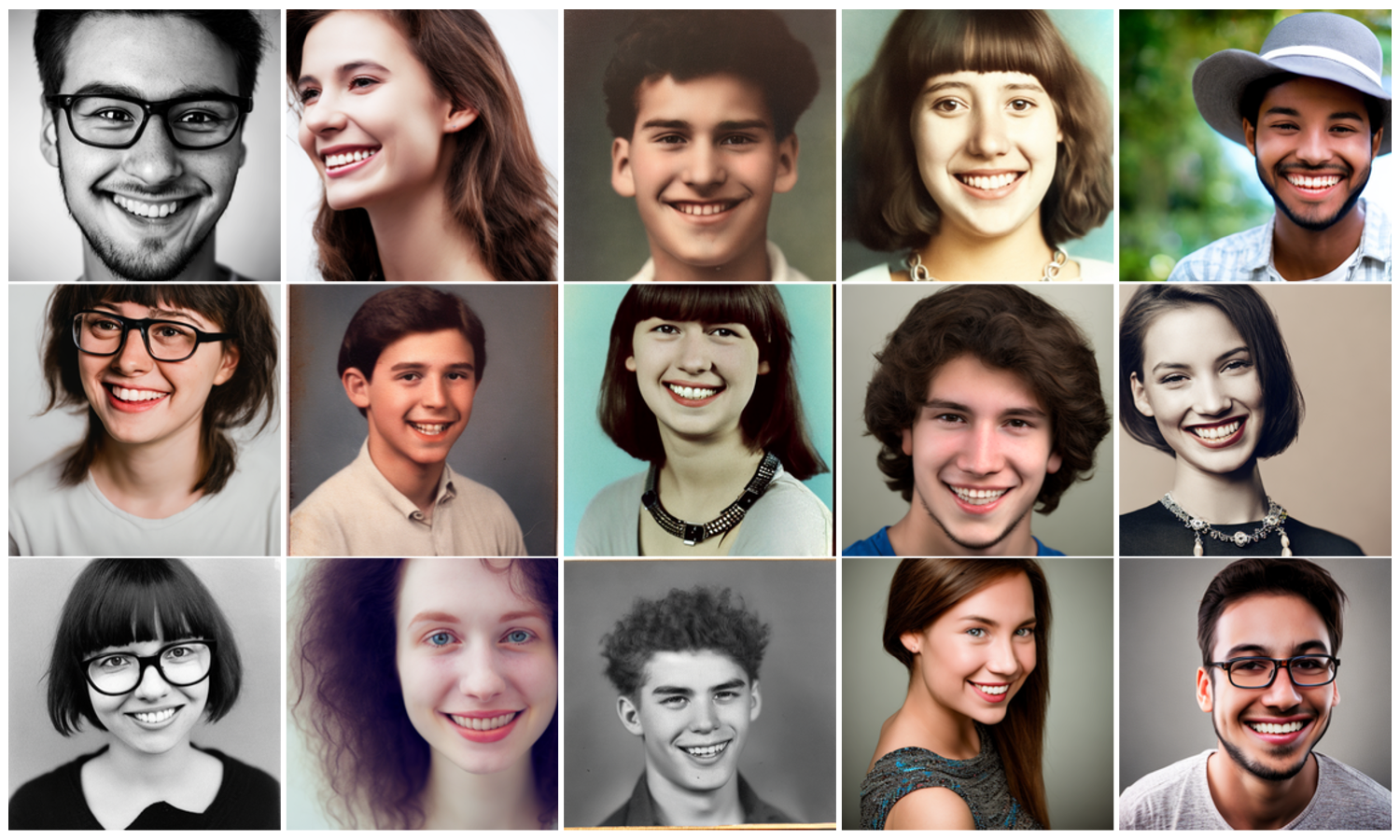
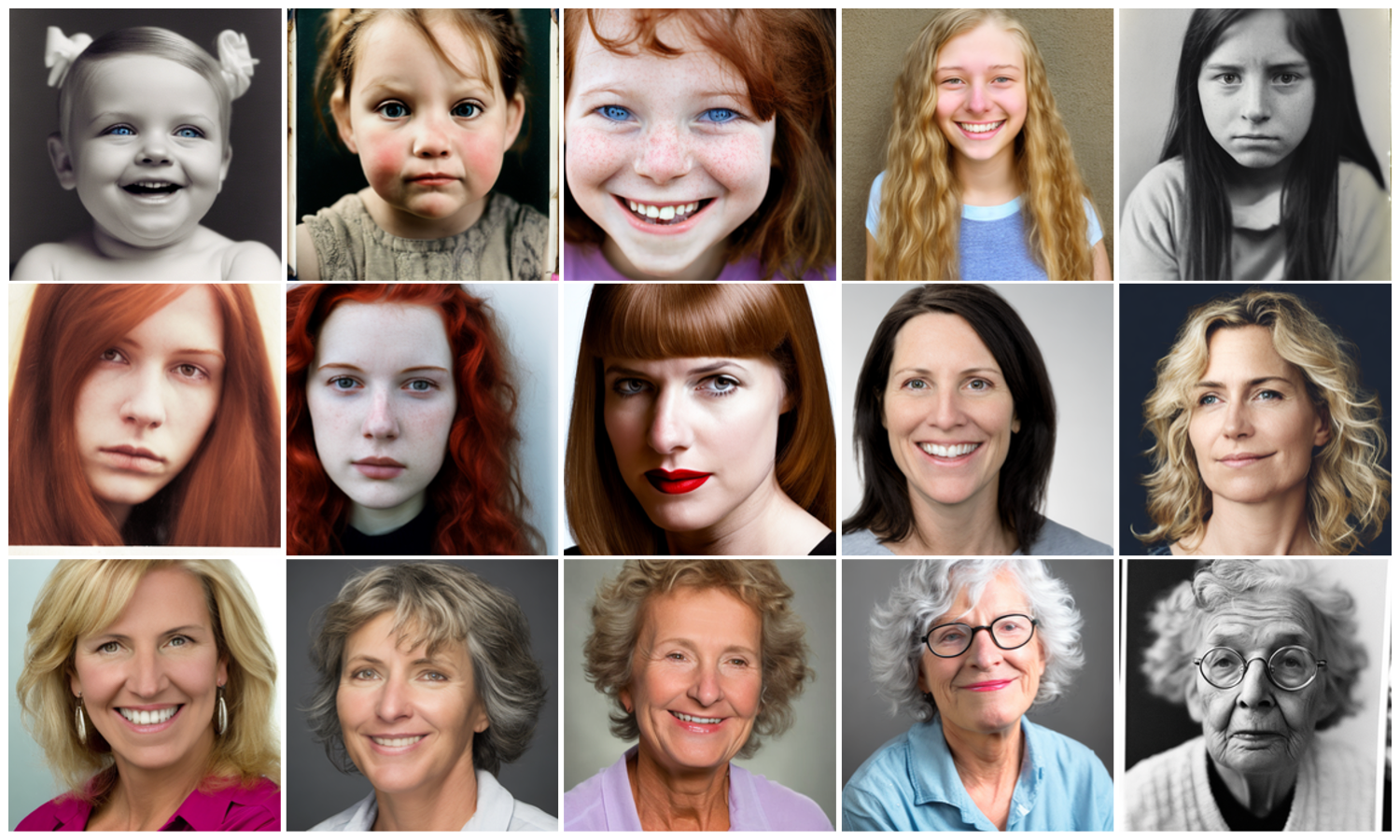
Contextual Synthetic Data Generation
Uses GPT-4-generated prompts to produce diverse contextual images for balanced fine-tuning.
Modern text-to-image models can produce highly realistic images, yet their potential to improve algorithmic fairness through targeted data expansion remains underexplored. This work asks: can synthetic data help mitigate bias in models trained on imbalanced real-world datasets?
We conduct a comprehensive empirical study of whether fine-tuning with high-quality, balanced synthetic data can correct such biases. We identify two central challenges:
Data quality and diversity. Ambiguous prompts and generator misrepresentation can produce low-quality or insufficiently diverse samples.
Safe adaptation. Domain and bias shifts between real and synthetic data mean that naive fine-tuning can improve fairness at the cost of predictive utility.
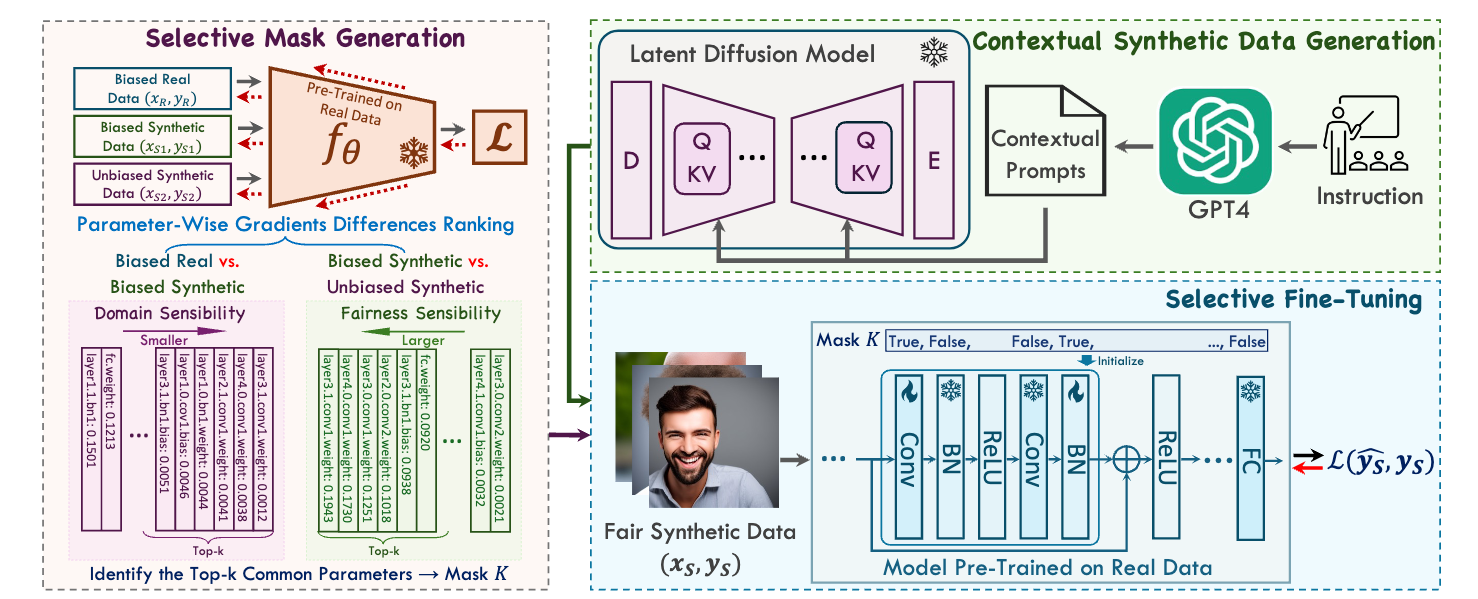
AIM-Fair combines contextual data generation with parameter-selective adaptation to transfer fairness from balanced synthetic data while retaining the utility learned from real pretraining data.
Uses GPT-4-generated prompts to produce diverse contextual images for balanced fine-tuning.
Creates a selection mask that determines which model parameters are updated.
Updates selected parameters to improve fairness while preserving pretrained model utility.
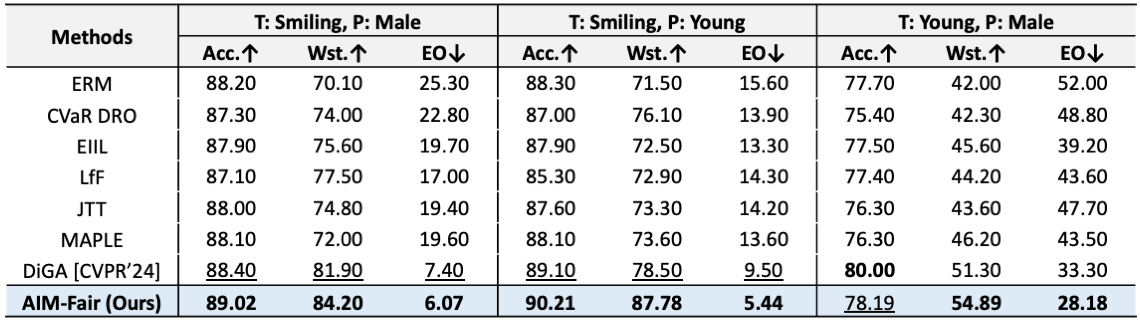
Comparison with prior methods on CelebA across different target and protected attributes.
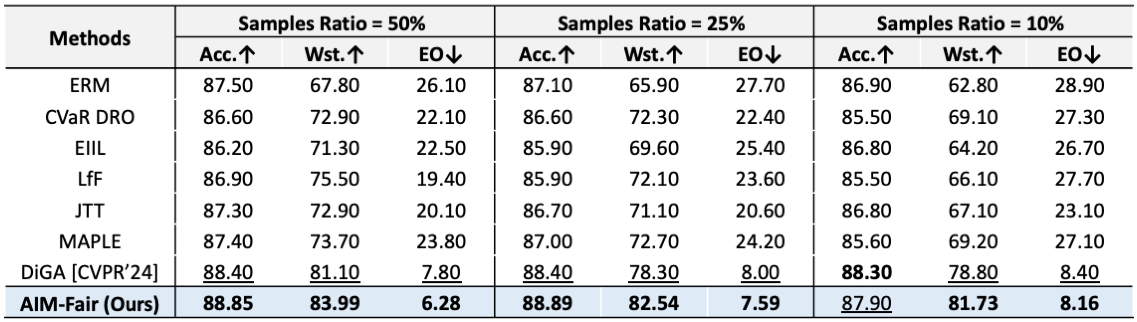
Comparison with prior methods on CelebA (T=Smiling, P=Male) across different training-set sizes.
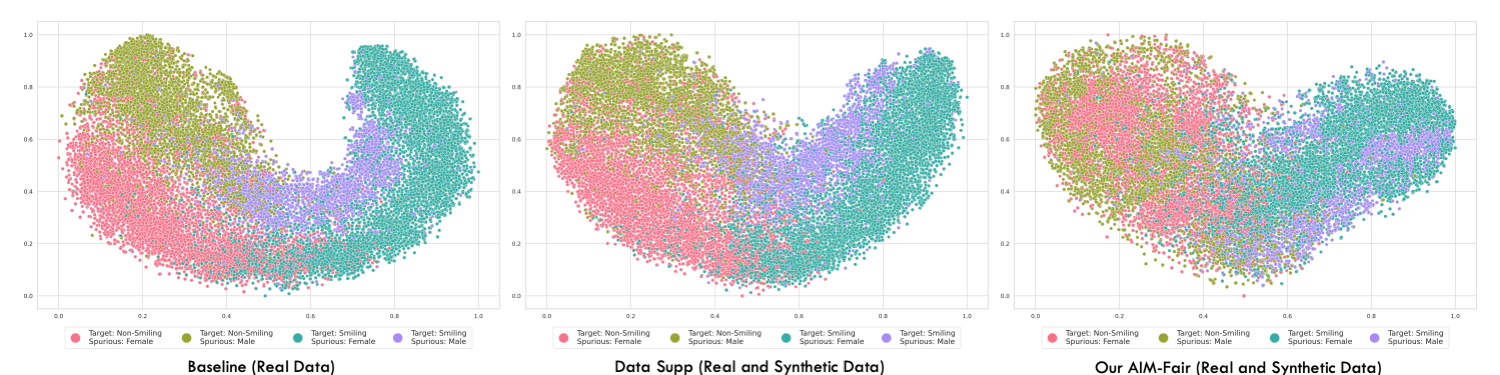
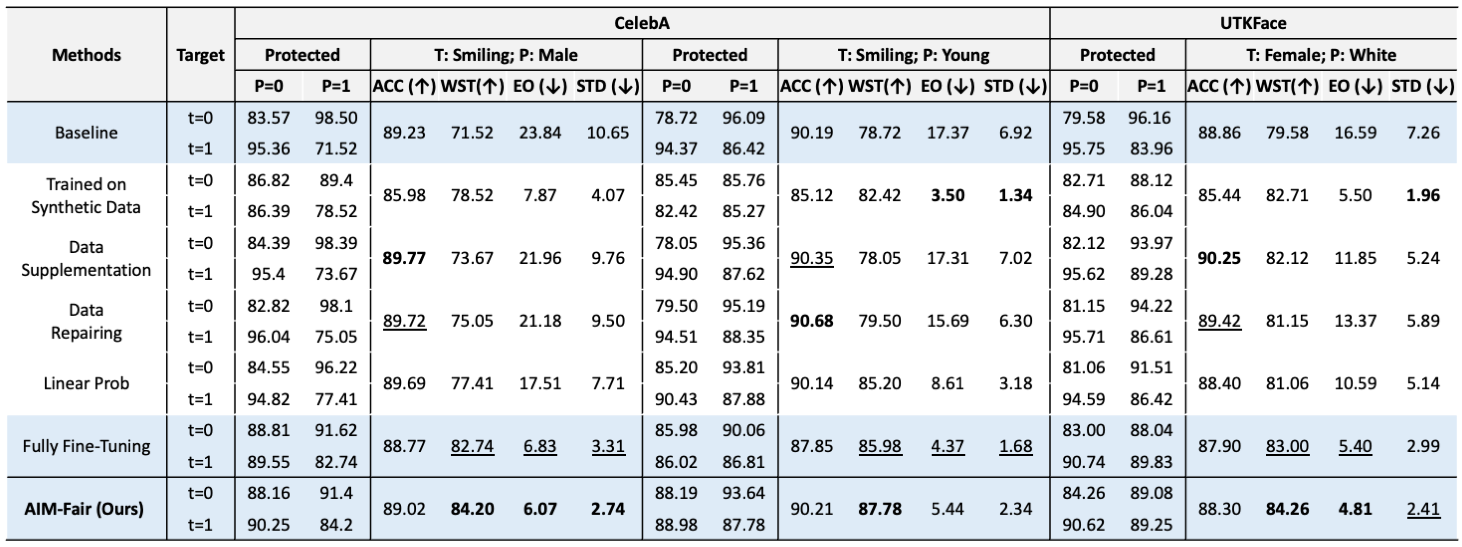
Comparison of different fine-tuning strategies on CelebA and UTKFace.
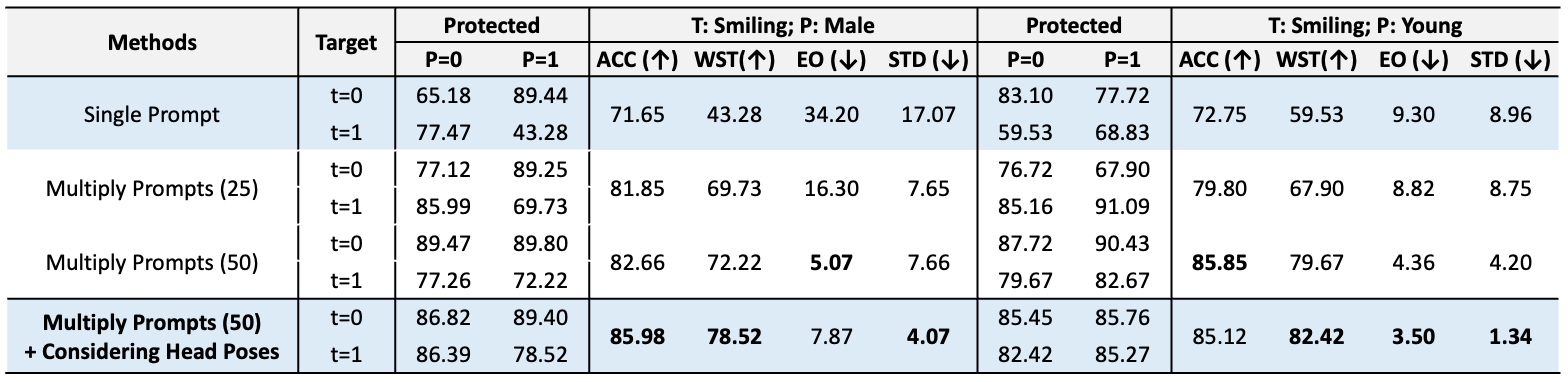
Results on CelebA (T=Smiling, P=Male) across different prompt types and prompt counts.